Episode Transcript
[00:00:00] Speaker A: What inspired you to help bring those 50 people together in 2024?
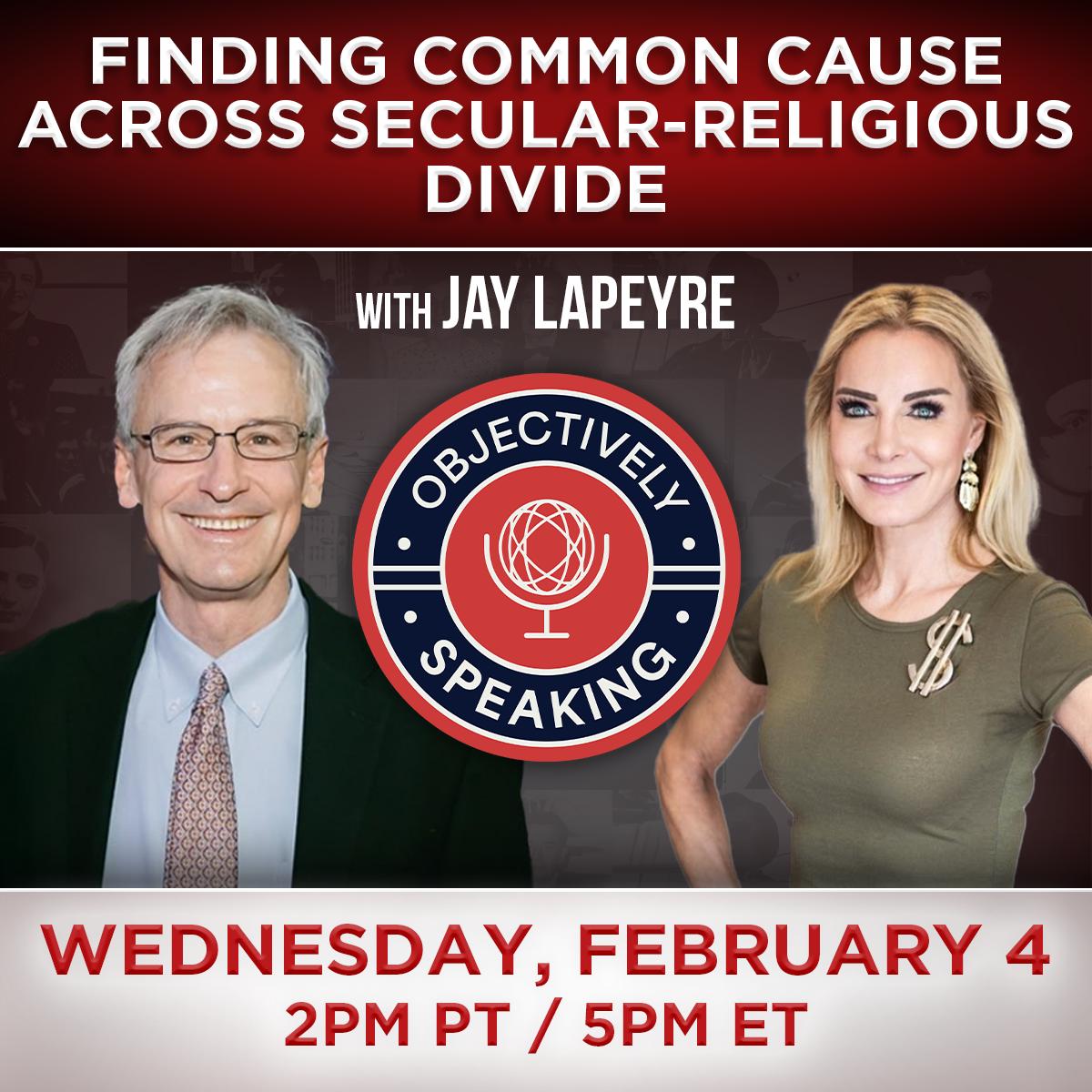
[00:00:06] Speaker B: It's a fascinating story because I think you may have fired one of the early shots, but the frustration that we have had where we have friends, people who are liberty oriented but are divided on religion and, but otherwise are admirers of Rand, and then people who are objectivist, secular, who really have a lot in common with the values that many religious people share in terms of commitment to liberty. So John Agliolora, David and I, Kelly, had a conversation and thought that we should figure out how we could have a group meeting where we park, what I'll call those differences, the primary values we have, which reason for the Objectivists and religion for the religious, and see if we could say what can we agree on. And that was the genesis of it. And I think the idea that, I think David used that quote, he said, we're not going to build a movement one excommunication at a time.
That was the basic idea.
[00:01:15] Speaker A: Yeah.
[00:01:15] Speaker B: So organize this.
[00:01:17] Speaker A: Yeah.
For context. For you guys watching when Jay says that I fired the first shot, I'll give you a little history.
This was back in 2016, I think I was just a few months into my job and I'm reaching out to contacts that I have and finding some, some big time fans of Ayn Rand in surprising places with people that were very religious. Andy Puzder, for example, who has makes all, all of his five or six children read the Fountainhead before they can get their driver's permit. Randy Wallace, of course, of Braveheart fame, who actually even wrote a magnificent screenplay of Atlas Shrugged. So I thought, oh, well, this is kind of interesting. I wrote it up and said what the heck? I sent it over to the Wall Street Journal and they accepted it. And so that op ed was can you love God? And I, Rand almost got me fired at the time. But somehow David and I worked, worked it out and really just the argument that I was making was the observation that there are a lot of very religious people who love Ayn Rand and were influenced by her fiction literature and we should welcome them and see what kinds of values we can agree on.
And that kind of percolated and percolated and then took on a, another life of its own.
So go ahead.
[00:02:58] Speaker B: And I think what, what we have is kind of the, the basic, that we all know is that every, every journey is an individual journey and people travel that, that path on their, on their own. And you have to meet them where they are. And that doesn't mean we've compromised objectivism in any way. We're simply saying we're not going to focus on these differences. We're going to focus on some areas of agreement in order to build, build commonality and figure out how we can work from there. So it's a, it's, it's, it's, it's the idea that we have a lot more in common with liberty leaning people candidly than we do with, with, with many atheists who are socialists and, and nihilists and every other variety of things.
[00:03:47] Speaker A: Right.
So that all of that said, I, I do notice that there is often at least an undertone of wariness between religious and secular groups. Was it challenging to find common ground and shared values from the get go?
[00:04:05] Speaker B: It was pretty fascinating to me because what, what we ended up with, I'll give you the.
Was after a day of work and you were part of it. The teams fully agreed that the other, they agreed on two things, that the other side was dead wrong and that they were right.
And they also agreed that the other side was extremely serious, thoughtful, diligent and sincere in their commitment to the principles of liberty and to the document that we had developed and shared. And I think that gave us a place to say so can we park that difference? Can we park this primary, what John Aguilar calls our primary values and focus on our areas of agreement in order to build a better world together? And that was the idea.
And I personally have a ton of very religious friends and I'm sure that every religious person has friends that they respect and admire that are not religious. And it's just the nature of how we share human values.
[00:05:07] Speaker A: Right. Well, it's part of this journey. You guys have created a. Well, I shouldn't say you guys, because I'm on the, on the board now too, but you created this really remarkable brochure and I'm going to ask Lawrence to pull that up so we can at least take a peek at it and perhaps share the link so those viewing are listening can also check it out on their own. And the brochure emphasizes civil discourse, unlike so many groups that focus on policy changes.
Is the Free Society Coalition intentionally positioning itself outside kind of conventional political activism?
[00:05:50] Speaker B: Exactly.
As soon as you talk about politics and even talk history as you get into the 250th. Because what we're doing is we're leveraging the Semi Quincentennial, the 250th, to really build a moment where we can use that as our basic content and engage people in discussion of the human values that are upstream from the politics and from the issues. So we're saying let's not focus on the politics or the policy side and let's not even focus on the people.
Focus on the text itself and engage each mind in that journey. Meet them where they are and engage them in the text to say, what does this language mean?
What do you think it meant to the Founders? Based on what you're reading here now, what does it mean to you? What do you think of it? It's a Socratic structured discussion that we think then positions the mind to buy us into what we all believe. I think is just natural to human beings, which is that we want to run our own lives. It's my life, my liberty, pursuit of my happiness. And I think the Founders made that explicit moral claim and it's one that we want to reinvigorate and elevate and really remind ourselves, is that the kind of society we want, where we get to the maximum extent possible, the ability to make our own decisions and we have to be responsible for the, for the foreseeable consequences of those decisions? I don't think that's unique to objectivists. I think that's really, is widespread and that's the hope that we can build on that common belief and values that are natural to humans and then build from there.
[00:07:48] Speaker A: So on page five of this magnificent brochure, there are discussion questions from the Declaration that I have to say seem partially inspired by Ayn Rand. Questions like how do we know the truth? What are rights? Where do they come from?
What is the purpose of government?
Is it fair to say that the religious cohort in your coalition had no objections to that framing? Or is it something that you guys had to work through?
[00:08:18] Speaker B: No, I think in our, in our framing, in those questions, we really did not have any religious. When we were analyzing, I can't say I detected any difference in how we were analyzing the Founders language. The, the, the evergreen language of we hold these truths to be self evident. I think, I think the fact that you're presuming you're, that there is such a thing as truth, then it immediately moves you into, well, how do you know what it is? Because once you accept that there is something called truth, then you have to say now, now, how do you figure it out? And using self evident was, was not Jefferson's original language. That's a long history. But, but I think those questions were not in any way difficult. There's, they were pretty, pretty united and Larry Reed was one of the primary authors of those sections. But David and Bob Levy were also involved in that.
[00:09:18] Speaker A: So let's say somebody that's watching wants to download the brochure and maybe use it in discussions with their own circle or discussions with people that, you know, might have a different political view or different views on religion.
Can you walk us through a little bit about how one might use the questions in the brochure using the text, objective meaning and the subjective interpretations?
[00:09:46] Speaker B: Well, what we do with the revised brochure, which is the one we're showing here, actually provides a bit of a structured Socratic discussion process.
And I think it's pretty close to self explanatory where you just read it and ask.
Now obviously there's a lot of additional digging that is related to it because we didn't try to put every question that would be possible. But it gets you sort of that starter point.
And I think that's where I would go. And for someone who I think is more likely it's not going to be the religious divide that's going to be there. I think it's more likely going to be the political dividend. When you get to what is clearly a libertarian document in the sense that the libertarian principles that the founders expressed, the moral claim that they made on the purpose of government, I think that's where some people would say no government might be much, much broader. But that's in the Philadelphia Declaration. And we're saying for people, if that doesn't appeal to you, leave that one alone.
But just focus on thinking for yourself and walking through the journey.
We lean pretty heavy on an idea that Da Vinci before you can love or hate something, you should understand it, which is not a particularly special idea, but it seems to be one that's lost in the tribal partisan world that we both live in where neither side seems to be able to independently think, but simply want to.
To, you know, to be part of their tribe. Which by the way, is not unique to political parties. We've experienced that in that a little bit within.
[00:11:36] Speaker A: Within Objectivism itself, which is unfortunate.
So we got some interesting comments here and questions. I want to encourage all of you. This is a really unique opportunity. We've got the chairman of the board of the Atlas Society, also chairman of the board of the Cato Institute, entrepreneur, and someone who is extraordinarily philanthropic, putting his money where his mouth is. So feel free to ask about this topic or others.
Carrie. Carrie Ann, Yay. Great to see you.
Carrie Ann Biondi makes an observation. Political independence NPAs are an increasing portion of the electorate. So it's a very savvy strategy to find common ground with those who are disillusioned with, quote, politics as usual. Kingfisher asks, we value truth in the liberty space, but many people don't focus on that. How do you reach the my side, your side people?
[00:12:36] Speaker B: Well, I think we're trying to stay upstream from those partisan divides and we're trying to avoid the group we're saying.
I think one of the more interesting questions, and you know, Marcia actually speaks to this a lot in her Socratic approach, is to engage Marcia and Wright and just engage people in the text in thinking for themselves.
And you don't have the ability then to start to shift. If you stay focused on that, you have to actually be thinking for yourself. You can't simply be referencing because you're dealing with something that's very concrete and specific. And that's the goal is to, is to have people think for themselves, travel this journey, understand it, then decide what they think.
And the more you can hear other cases and more you can understand somebody else's point of view, the better informed you're going to be about what you actually think about. And so that's the idea. We don't even want to be in the partisan game. At the end of it. We're not trying to unite in the sense of saying, we're trying to change your mind and you want you on the team. We want you to select the life you want and the thought process. And that begins with the thought process.
Every one of these questions is fundamental to my life, to the importance of my life. What kind of world do I want? What kind of person do I want to be?
These are fundamental questions.
[00:14:10] Speaker A: So the Philadelphia Declaration speaks of challenging the polarization, the nihilism and authoritarianism that, that frankly threaten all of our freedoms.
Is this is the idea that having more of these deep discussions around shared ethical values will help to ease polarization?
[00:14:31] Speaker B: Exactly. The. The idea that if today I think we, very few people in, in the political world who are especially, you know, engaged in the kind of vitriol actually know what they're for, they can't actually express a concrete philosophical position. What they can do is say, I hate the other side. So if you say, what are the. What's the left for? Well, they, they know that they, they hate the right. And what's the right for? Well, we live because we know we hate the left. And I think the idea here is to say park all of that and actually, you know, move, move to A point where you say these are human beings and actually we share a lot in common. Now if we share a lot in common, what else can we build on and, and then maybe get to a place where we lean heavily into the idea that it's my, my life and I have the right to run it and I actually have a moral obligation to run it and I need the freedom to be able to run it the way that I choose to run it.
I think that's a predictable outcome of people who take this seriously wherever they end up on the political spectrum.
[00:15:46] Speaker A: Right. So the first value in the Philadelphia Declaration is quote, reality is the ultimate standard of true and false, including essential moral truths.
That seems like another Rand inspired part. Did again, did you get any pushback on that from the religious cohort of this coalition?
[00:16:07] Speaker B: Well, you, I, I, I was not at the, at the, the tables that were working through some of those, some of those questions, but I think that we expected, everyone expected that to be a difficult case. And we had, I think that was very smooth.
I think Ramey and David and others who were in that, uh, conversation were surprised that, and I think that if you were going to try to express, I think that what you have out of the Larry Reed and Father Sirica and others was a very deep view that, you know, that life on earth was, was one that reality would control on. And if you get more into the Aquinas uncaused cause and that sort of stuff, when you, when you say what's the what, how, how do they square the circle, if you will? But that was not, that was not nearly as difficult as expected.
And I think what it reveals is pretty much what, what we know about objectivism is that when it's human, it's, it's, it's the validity of the senses. It's the idea of, of, you know, if I can perceive it and validate it, it's not easy, but I can find the truth. And that's, that's, that's the guide anyway.
[00:17:25] Speaker A: So, all right, so if this, if, if reality being the ultimate truth and reason being the arbiter, what, which values, what were Took a little bit longer to kind of workshop, I think, I.
[00:17:42] Speaker B: Think the, the second one, maybe you can pull that up.
The one that the, in the, in the Philadelphia.
Anyway, I'll, I'll read it if, and, and it's, it's, it's the idea that by nature we're both individual and social beings. There was a, a, I think this was 90 about language and we couldn't get past each other because I think the, the religious element was very, very eager to push. This should be the second one.
[00:18:23] Speaker A: Second point.
[00:18:24] Speaker B: The second one. Yeah.
They, they.
So by nature, by nature, we're both individuals and social beings.
I think we just all knew we're both, but somehow the conversation kept going back and forth that when Objectivists would say we're individuals, that meant to us we're individuals and we're social, of course.
And religious people would say we're social, meaning, of course, we're also individuals. And so it wasn't until we actually made that explicit what we mean that we got past it. But I think we discovered that throughout that 80% of the areas of disagreement were about language.
It was simply about, I didn't use the language the way you used it.
And it was remarkable to me at the end of it how excited everyone was about and proud of the fact that we, we all agree on this, on this, on this statement.
[00:19:27] Speaker A: Right?
Lock, stock and barrel. Asks, are you starting chapters? Is there going to be a Free Society Coalition convention?
[00:19:38] Speaker B: Well, we, we are housed at Donors Trust.
Lawson Bader is, is on the board and he has been huge. And he's, he's the CEO and chair at Donors Trust. And he, he was an early advocate and supporter of this.
And, and I think the goal for us is not to build a separate nonprofit and to start chapters, but to provide what I'll call this tool, what I'll call an intellectual ammo for people to use and network and take to their organizations. And the goal would be to say, take it to your organizations and use it where you see value. Use it to reach new audiences.
Use it, Use it to connect to schools where you know that most importantly, they, this is a long game. And if we're going to change the culture, we're upstream from politics, we have to get into education and then we have to get into personal individual ethics, because that's the side that we have to influence.
And once we get to the idea that leaning away from group theft and group identity essentialism, left or right, is a moral imperative, you start to respect and have a lot better world to build on. So that's the idea.
[00:21:02] Speaker A: Another interesting question from Carrie Ann Biondi Jay, did you find that John Locke is a central figure whose work in the Second Treatise is something that religious and secular people can both get behind?
[00:21:17] Speaker B: Oh, definitely. Yeah. No, I think, I think the view, if you, I'm not a historian and a scholar at all, but if you just look at what was in the Bathwater at.
You know, with the founders it was they were steeped in lock, they were steeped in history and an understanding of human nature. And they were integrating all those pieces. And there was definitely a strong religious element that influenced but also united. And I think that's one of the lessons that we also saw that okay, you had all these different points of view, the founders, but what united them was a statement of what they were for. And I think that's a really important part of what we have tried to do is focus on what we're for and not spend our time focused on the differences and what we're against.
[00:22:09] Speaker A: What ethical commitments do you think modern America more broadly could benefit most from reaffirming non initiation of force commitments to objectivity, civil discourse.
[00:22:23] Speaker B: I think this is much more about a mindset and the idea that I don't want to be a victim. I want to have agency. I want to be an achiever. I want to take pride in my life and I can't do that without the liberty to run my life and be responsible.
If you build on that basic mental model and that idea and I grow up with that, I'm going to see the world a little differently. And it doesn't mean that there aren't complications in politics and there are difficulties with rights and cities and all the things that need to be worked through. But it does bias you heavily into liberty and to recognizing that to the maximum extent reasonable you want to protect my right to run my life. Which I think gets us to a place where.
Where the ethical standard and the moral claim leans to liberty as opposed to lean to what I'll call the group identity collectivist mind which kind of rules the day to day. It is. It's immediately people do that switch where they move from me to we and act like the we is all united in some strange way that is taking unlike items sticking all in a cluster and then acting like that's okay to to violate what we all I think most believe to be unalienable, inalienable rights. And that's certainly the founders language.
[00:23:54] Speaker A: So for those who are just hearing about this, can you give a quick overview of the Free Society Coalition's journey since convening in Philadelphia back in April 2024? How has the group evolved from that initial Philadelphia declaration to broader outreach tools like the brochure and which again we'll link in the chat and the show notes?
[00:24:19] Speaker B: I think what where we began was with the idea of giving a third way to the libertarians so that they could Reach new audiences, Libertarian, liberty leaning people left and right, I mean religious and secular and just a path not to say you compromise your beliefs, but to say here's a way for us to figure out how to, how to appeal. And especially important in this, you know, sort of woke nihilistic culture where if you don't give people a moral case, they, they, they, they, they latch on to socialism or Marxism or whatever because that's, that's what fairness and is sort of the obvious place to go. They think they have the moral high ground as soon as they can point to any suffering that isn't, isn't, isn't mandated that the government repair it.
So that idea of shifting the moral high ground was sort of central to what we do.
And then by doing that, I think it begins to shift the game. And then the idea of when we started thinking about, well, what are the implications of that?
We started thinking, well, why can't we appeal more than just liberty? Why can't we go to left and right and more progressive and build the same concept? And then we had talked from the beginning about how do we leverage the 250th and with so much focus on civic education and celebrating the 250th. And we noticed that for the most part what people thought they were celebrating in the 250th was abstract and pretty shallow. You'd ask people what do you think of the 250th? And they'd say, well, it's celebrating American values or it's celebrating democracy. Neither of those is in any way descriptive. I think by democracy they mean liberal democracy, protecting minority rights or something.
But that requires real work. So this is the idea of getting into that real work and then building from knowledge and understanding before you reach conclusions.
[00:26:37] Speaker A: All right, question from Iliac. How can we practically apply moral agency in everyday debates? Most such encounters become just another argument.
[00:26:49] Speaker B: Yeah, I think this is our best tool for trying to figure out how to do it. I don't think there have been numerous efforts for people to bring people from opposition points of view on a political issue together.
And my superficial understanding of most of it is that they end up with more respect for the other person, but have not changed their point of view at all.
And it's also didn't scale. You couldn't actually.
This was built over, you know, dozens of hours of connections and whatever this is an idea for how can you reach people upstream, scale it and think the long game. So if you, if you're looking for how you can impact politics today? I don't think we have the answer. If you look for how you can impact the culture 10, 20, 30 years out and longer, you know, this, call it the next 50. I think this is a powerful tool for how we can reinvigorate the mind and bring that sense of American independence which is truly a global. It's America as an idea. It's America as a set of ideas that really speak to human nature everywhere in the world. And I think that's what's so exciting about it, is that it's so self evidently obvious that as soon as you get into it, you do immediately resonate because it's natural. Any of us with kids know that, you know, we've, we've had this experience with, I think I had it with my 3 year old when he made clear to me that you're not the boss of me. And, and you see that constantly. And then you see kids telling you, don't help me. I want to do it myself because I'm, I'm proud. I want to achieve.
This is human nature. And we have to, you have to learn to be dependent.
Human nature, I think naturally would take you in a different direction.
[00:28:48] Speaker A: So time is flying. We're already halfway through the time allotted and that you agreed to give us. So why don't we have a little palette cleanser. You are joining us from your office at Latrim in New Orleans. Tell us a little bit about some of the things you've got framed behind you on that wall.
[00:29:10] Speaker B: Okay, well, I think those are, those are the collection of my heroes. When you go, I'm not sure which way you're seeing it, but going from the poster of the Atlas Shrug movie, then you also have Rand and Aristotle and you have the, the Declaration of Independence. And under that I can't quite see, is that Jefferson?
I think so. And then Ludwig von Mises and Frederick Douglass. And I think that's a pretty good collection of superstars in the intellectual world.
[00:29:38] Speaker A: All right. Alan Turner asks. I know many who have lost faith in institutions of late. What does the Free Society Coalition say in Restoring Trust?
[00:29:53] Speaker B: What's that quote, I think, attributed to Clinton? Maybe once you can fake sincerity, you got it licked.
I think the.
I think trust must be built on genuine.
And that's what objectivism and seeking truth bring. It doesn't require loyalty to a tribe. It requires loyalty to a commitment to the truth. That doesn't mean you won't make mistakes. But as long as organizations lose their mission and are into self preservation, or promotion of some other agenda that's independent of the mission, you will see a continued degeneration. And I think that trend is only as it's not new. It's been a declining Trend for probably 70 or 80 years where trust in government has continued to decline. And trust in academia, clearly the higher ed. I mean, you can just look at the duplicity of all trust. Yeah. So seek truth.
Have truth be your guide. Have reality be the, the arbiter of what truth is, and then have a, an objective process for, for seeking truth and for determining it and for asking the hard questions about, well, is this really true? And, and how do I know? And, and what's the evidence against it and for it, and are there other reasonable explanations that could, that could fit this and stop making claims?
So until those habits change, I don't, I don't think trust will be restored. Yeah, the politicization of every organization today and even of lawfare and all the rest of it, these are disasters because they're sort of attacking the last bastion of where politics was not supposed to go. And it's not that it wasn't there before. It's. It was not out of the closet. Now it's out of the closet, which I think is far worse.
[00:31:58] Speaker A: Yeah, I was. I'm in the process of reading the book by next week's guest, Richard Vetter, and it says, let Colleges Fail. And of course, Ayn Rand talked about her view of politics as the complete separation of economy and state in the same way and for the same reasons as we have the separation of church and state. And I think one other aspect which could go towards restoring trust, or at least building trust, would be to get government out of these institutions, stop the subsidies that are providing these perverse incentives and a lack of transparency that is so radically different than, you know, what you tend to see in the private sector, where people are not necessarily protected from the consequences of their bad decisions, while as institutions, they so often are.
[00:33:04] Speaker B: I think that's a really big point. And what you've seen out of the libertarian and even conservative side for a very long time is the idea that as you stick more money in the trough, don't expect pigs to behave. They will. You know, there's a quote about, you know, the truth is the first casualty of war. Truth is the first casualty of politics.
And that's especially. That becomes more and more intense when the stakes become higher and higher. And then when you concentrate power in political, you know, patronage decisions, it's just, it's too much I can't, I cannot walk away from my business, my family, my, my employees, my organization, because the funding is now dependent. They regulate, they subsidize, they have. So the more that's at stake, then the more infighting is going to be intense.
[00:34:04] Speaker A: Yes. Towards that point, my modern gallery asks, so it is not yet time to shrug. And I would say no battle is truly lost without any hope of reprieve or reversal until we say it is. And yet, at the same time, I think we can all find ways to withdraw the sanction of the victim in areas of our lives, whether it's a sacrificial relationship or a sacrificial relationship with the state that you're living in and finding ways to protect yourself.
All right, this is a great recommendation from Carrie Ann Biondi. She says in addition to Marsha's wonderful Socratic practice, there are some great books on facilitating conversation.
Lindsay Bogassian's how to have Impossible Conversations is one.
And Carrie Ann Biondi also recommends Alexandra Hudson's the Soul of Civility. Lawrence, maybe since we had Alexandra on the show, we can put the link to that interview in, in the, in the chat. I like numbers, asks Jay. Have your conversations with people with different views give you hope that we can counter polarization in other aspects, other areas?
[00:35:30] Speaker B: I, I'm trying to stay away from that question.
Okay, the. If you go to the back cover of this brochure, you see the, the board of advisors that we have.
[00:35:42] Speaker A: Yeah, well, let's talk a little bit about that because I was, you know, tremendously honored to be invited to be a part of that advisory board. I kind of feel like the pip squeak there because you put together a powerhouse team of people like Walter Isaacson, Greg Lukianoff, former ACLU president, Nadine Strossen, Danielle Allen, and other big names. I'm generally curious, how did you put such a great board together along the kind of cultural and political spectrum?
[00:36:17] Speaker B: I think it was mentioned earlier, I think Marianne may have mentioned that the frustrated middle, if you will, of independent people. And I would say that the left is every bit, at least many on the left every bit as frustrated as others, meaning the old time liberal. And they were very free speech committed people. They're very oriented to civil discussion and debate and in pursuit of whatever their standard would be for truth. So that's what energized them to say, we love this process. Now, we did put language in that said that you may or may not in signing on to this, you may or may not agree with the Philadelphia Declaration. We're not asking you to do that. We are asking you to agree to support and promote the process of the brochure, the civil discourse, engagement.
And I think we have seen a common alignment and interest that comes up to that point. After that, I think we can expect that there will be people who would say, well, I agree that people should run their own lives, but I also agree that you should be doing A, B, C and D. And we probably would differ, I'm sure. I know we would differ on the scope of those issues, but I feel that there's a lot here, a lot more in common than we imagine if we start from individual personal ethics and build from there.
[00:37:51] Speaker A: So I'm thinking of some of the people that are the big names on that advisory board. A lot of them are Democrats, definitely not libertarians in any way, shape or form. But I find it encouraging that people can say, hey, I'm willing to join in on a joint enterprise where we have identified these, these shared concerns, these shared values. And I know you want to stay away from questions that you don't want to answer, but I can't help thinking back to the founding of the Atlas Society and the debate over whether speaking to groups who don't share your values is somehow, you know, platforming them or sanctioning them in some way and making the case for toleration. And, you know, David Kelly famously said, if we are wrong, we have something to learn, and if we're right, we have nothing to fear. So do you kind of see that sort of truth and toleration DNA of what brought us together? 30 seconds.
[00:39:04] Speaker B: Absolutely. I mean, these themes are the same.
Am I committed to tribal loyalty to. To be, to. To some higher authority telling me what to think or to actually think for myself? And for, for someone who said that Rand was the personification of her values and, and made no mistakes. And objectivism is therefore what she said, and that's that. And you can make some logical implications from it, but you can't otherwise question it and still be an objectivist. You kind of go, well, you know, Rand had bad hair days and she was not the model of her values and virtues in every circumstance. And separating the person from the ideas is critical. And the idea that you can honestly have open discussion with people is the only way you'll ever be able to reach a new audience and a new mind. So all this is the same theme. And maybe that's what all of the training that I've gotten from David and you and from others is, is part of what maybe led me to be so enthusiastic about this path because it's an approach to the world that says I'm not worried about being wrong because I'm committed to seeking truth.
So I don't have the need to defend and be right. I just have to follow what the brain tells me of the facts and adjust and admit when I've made a mistake. And that's not a hard thing to do if you take pride in the pursuit of truth versus this idea that you can't make a mistake.
[00:40:43] Speaker A: Right, right. So. But there are limits, right? I mean, Rand herself would have said that, you know, with regards to those who have abandoned reason, that there's no help for them and, and leave them alone. And not necessarily saying that people who disagree on an issue are, you know, one side is necessarily being engaged in active evasion. But it does sort of beg the question, how do you appeal to those who don't even see our founders, for example, for, for this project as virtuous, but see them rather as slave owners, land thieves, imperialists, tax cheats, etc. How do we seek shared values with them? Or do we.
[00:41:30] Speaker B: Well, I think you stay away from focusing on the judgment of those people in the same way initially that you focus on what do you think of the ideas. So if you don't agree with these ideas, what are the ideas you agree with, what are the ideas that you promote? So focus on what we're for, what you're for, tell me what you want, tell me what you believe is the ideal society and mostly you'll get a blank out there. But I don't think this is a, I think you can't skip the step is where I would say if we start, I think Franklin had a quote and I'll mess it up, but it was something that productive and honest and productive people are cheaply governed. And I think that captures what is the essence of human nature, that if you're productive, you're an achiever, you're honest, then you're going to take pride in that kind of being, that kind of person, that kind of life, and that's going to lead to a very different society than if you're, if you, if you bring a win lose mindset where it's, let me see what I can get in a transactional view of the world in a way that, you know, the win lose mindset actually creates this negative sum society where people waste a ton of time and energy of fighting and wondering and not being able to have predictability outcomes. Anyway, I'M sorry I get carried away on this, but it's just so obvious that it's, that it's, you can't build, I think you can't build an ethical culture on individuals that, that aren't ethical. We have to be ethical.
[00:43:15] Speaker A: Alan, thank you for giving us the full quote there. A virtuous and industrious people may be cheaply governed. Ben Franklin here's practical question. Jay from Lock, Stock, Barrel. He says, I see on the Free Society Coalition's website the current partners of the fsc.
What do you think is the biggest obstacle in gaining new partners in this space?
[00:43:44] Speaker B: I think we're at the early stages. We've seen a tremendous amount of enthusiasm. So the biggest obstacle is just how well we can organize ourselves and spread the virus and reach new people and push it. And I think that is, we're definitely stepping it up now.
I think we had to go through a journey of discovery to get to as clear a picture of the what and the strategy and the implications. I think early we were much more about promoting the Philadelphia Declaration as a, as an end in itself.
And I think now we're promoting the process of thinking as an entree to reach people where they are. And then we think we'll get more than our fair share of minds, hearts and minds with building on the moral high ground for my life, my liberty, pursuit of my happiness. That'll lead people to be more oriented towards liberty, freedom and agency.
[00:44:42] Speaker A: So the brochure is framed as, as you say, a thought starter, a thought process instead of a manifesto. Which types of audiences do you envision most picking this up and potentially running with it?
[00:44:56] Speaker B: I think we're really targeting focused on the long game. So anyone who's doing any serious work with, with civics education celebrating the 250th, we want to be at that table if there's a educational programming involved and, and we're pushing that. But then we also want to be in schools and if you have teachers and you have others and they're going to deal in controversial issues and they're going to have a lot of discussions about whether Jefferson was a hypocrite and slave owner and all that, we're not saying you shouldn't have those conversations if you want, but we're saying they're not going to be as productive as engaging in the teachers text of the Declaration's language and asking people to take that journey on their own without being distracted by that discussion, at least at some point, ideally at the beginning because it helps shape the mind. But at some point along the way, park all those differences and think about the text itself. We think that's a pretty compelling way to reach a new mind, a new audience, and to build what I'll call, call all the tools of thinking and civil discourse that it takes to actually be able to make sense of the world over time.
[00:46:11] Speaker A: What is next for the Free Society coalition after our 250 celebration, July 4th of this year?
[00:46:19] Speaker B: Well, I think the goal is to push hard as we can to position ourselves so that we are embedded, have a platform in place, so that we do have an enduring educational impact in civic education over time. The idea of saying for the next 250, what are we going to look like? And this is our approach to reinvigorating that understanding of the Declaration. One of the serious tragedies in civic education is that if you ask people what was the Declaration about?
Many have no idea.
They might know. I'm sure they do know, at least most would know, even college students, that it's independence from. And they probably know it's Great Britain. But beyond that, the principles, the ideas, and then they would immediately get into, well, these were all about slavery and slave ownership. And there's a lot of narratives that are really not factually defendable, but those would be influences. This is a way of put all that aside, think about the, about the text.
[00:47:27] Speaker A: So how can listeners, viewers get involved, signing the Declaration, sharing the brochure, facilitating discussions?
[00:47:37] Speaker B: Yeah, I think all of those. So we will have the revised brochure available.
You'll be able to order small amounts of it on Amazon, just pay the shipping.
This revision probably will be ready to go within three weeks. The current brochure is still pretty terrific. It's just not structured as the civil discourse, you know, template, structured discussion that I think we've migrated to. And then if your organization wants to sponsor something, we can ship any number of brochures to you, the hard copies and then you can but model this, ask friends what they think, spread it around, use the electronic version where it's available to, to push it and see, get their opinions of it. And we will also then be hosting webcasts and platforms and things of that nature. We'll have a regular update letter, join, you know, sign up, receive the information and just recognize this is a, this is an effort to provide material to network and support others efforts. It's not primarily an effort of our own, but we want to be a resource with people with brochures, with knowledge, with venues for people to share ideas so that's the goal.
[00:49:00] Speaker A: Well, that question makes me think of the Jack Miller Center. Those who are regulars to, objectively speaking, know that the Jack Miller center has been a wonderful source of scholars on historical topics that we've been having over the past several months. Maybe tell us a little bit about how the Free Society Coalition is partnering with.
[00:49:25] Speaker B: Well, I'm glad you raised them because Hans and the Jack Miller center have the summit on Civic education that I think is scheduled for May 18 and 19, but it's in Philly and it's a really significant event. And Hans has been a thought partner on much of this. And the Jack Miller center have been front and center buying into this. Now, they bring a largely conservative religious background to it, but we have had zero question or concern or differences about any of that. It's all been about how do we, how do we promote civic education and how do we promote these central themes?
So we're on that agenda. We will. We have a panel. Larry Reed will be the moderator and he will have two a left leaning, I think it's a Brookings Institution constitutional scholar, and he'll have a constitutional scholar from aei and he will be moderating, you know, a structured Socratic discussion with those guys using the brochure. And that'll be pretty cool.
[00:50:45] Speaker A: Yes. Well, I'm, I'm looking forward to that. I'm going to be there for that. So if anybody's in the area and would like to know more, find out how that they can get involved and please reach out to us. Jay, we're almost at the top of the hour, but we have some time. Is there anything that we didn't cover that you'd like to leave the audience with?
[00:51:06] Speaker B: Well, just that I, I think it's.
One of the points made earlier is do you, you know, is do you give up? Is the fight lost? Is that sort of.
And there's some things worth doing even when the odds are against you.
And to me, optimism is a far better way to view the world.
Jag, you're relentless in demonstrating that trait, and I think it produces results.
Motivation is believing you can achieve something and wanting to achieve it, wanting to achieve it and believing it. And I think we have to say, we don't want to look back and say we missed a window. We want to do what we can do with the time we have to figure out how do we take advantage of and give our best to chip away to make this the world we want, the world we want to live in.
And I don't Know whether this is Catholic guilt or what it is because I grew up Catholic or whatever, but I just have a sense of deep gratitude and a feeling of a moral obligation to chip at this thing and contribute because I've had such a amazing benefits from these ideas. They have foundationally impacted my life in a way that makes it so rich and fulfilling. And I can't imagine what my life would be without them. And I think I just want to do what I can do and believe that others share that same sentiment. So let's lace it up and give it a shot, you know, why not?
[00:52:42] Speaker A: I agree I similarly benefited, but I would also bring it back to something that's kind of in the water at the Atlas Society. With regards to open objectivism. It's about more than whether or not you agree with Ayn Rand when she said that there was still a lot more work to be done in elaborating the philosophy that she had started to organize. It also has to do with kind of how you see ideas. Are they a rigid set of doctrines? And then how do you spread ideas? And with open Objectivism, I think that there's a greater tolerance for taking risks.
Yes, you'll be judged on the mistakes, but you also know that all creativity comes from being willing to take a risk. And I think that risk taking and toleration for the iterative process gives you a sense of optimism and a sense of that this can be done, as Ayn Rand would say, so.
[00:53:48] Speaker B: So those of us, those of us who who played sports are all familiar with playing not to lose and playing to win. And we, you know, you, you have been inspirational in playing to win. I think in our early conversations there was some criticism of mistakes that were made. And your answer was, we're going to make mistakes. We try to avoid them, but we're going to make mistakes because we're planning to win. And I think that's the way to go through life. I really do. It's a much more inspiring and aspirational mind mindset.
[00:54:20] Speaker A: Well, I couldn't agree more. And we will end it there. Thank you, Jay. I really appreciate your spending this time with us and also for all that you do for liberty and for this really terrific new venture of finding a more productive way to find common ground and move forward together. So thank you, enjoyed it.
[00:54:42] Speaker B: Thank you. Thanks so much.
[00:54:44] Speaker A: And thanks everyone for your great comments, especially that last one that came in over X.
It gives us the moral fuel to keep digging deeper. And as Jay said, playing to win. I hope to see you all. Next week we are going to be joined by, as I mentioned, Professor Richard Vetter of Ohio University to discuss his book, Let Colleges Fail the Power of Shumpterian. He didn't use the word, but you know what I mean. Creative destruction in higher education. I'm looking forward to that and looking forward to seeing you then.